
A study of more than 1,800 women found more frequent activity was linked to a lower symptom burden, with the strongest link for anxiety and mood.
By The Wellness Desk — CelebnMusic247
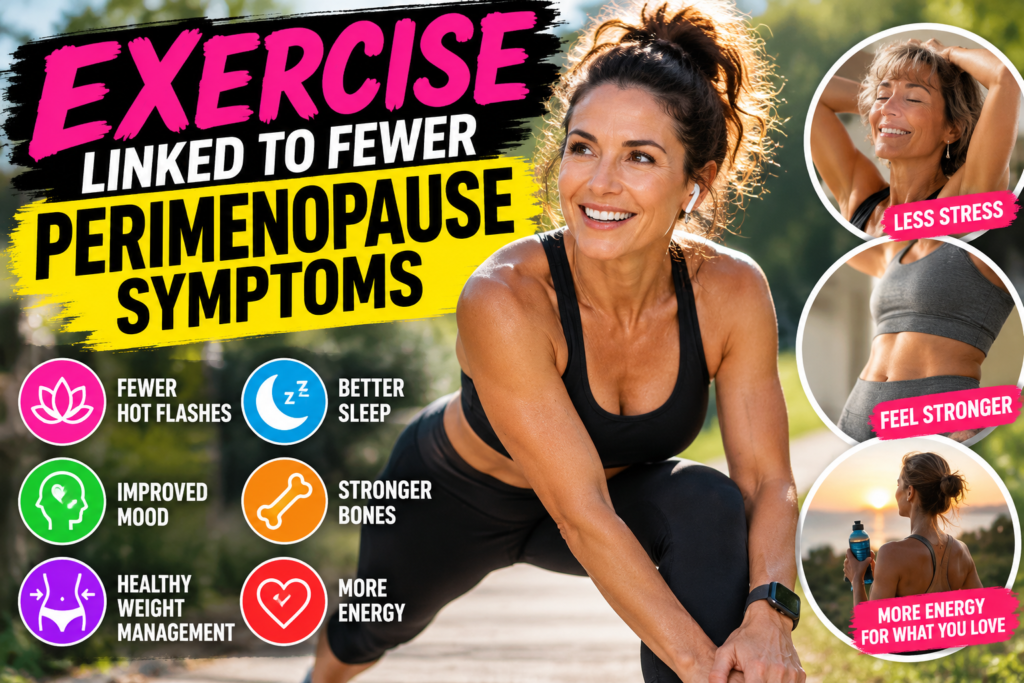
More frequent exercise was linked to fewer perimenopause symptoms in a new study reported by Healthline, with results recently presented at The Menopause Society‘s 2026 Annual Conference. Per Healthline, researchers recruited more than 1,800 women from around the globe who were using the Flo app, and the link appeared across body-based, psychological and urinary symptoms.
That breadth is the finding to read carefully. Per Healthline, participants completed online surveys about how often they were physically active, ranging from not being active to exercising more than five days a week. They also reported symptoms in three categories rated with the Menopause Rating Scale: somatic symptoms such as hot flashes, psychological symptoms such as mood changes, and urogenital symptoms involving urinary or vaginal issues, per Healthline.
Where the Link Looked Strongest
Per Healthline, higher rates of physical activity were associated with fewer symptoms across all three categories, and the greatest benefit observed was for psychological symptoms. Study lead and co-author Liudmila Zhaunova, PhD, director of science at Flo Health, told Healthline that psychological symptoms such as low mood, irritability, anxiety and exhaustion are among the most disruptive parts of perimenopause and are often overlooked.
Zhaunova also offered an important caution, reported by Healthline: women with more symptoms may find it harder to exercise, so further research is needed to understand the direction of the relationship. In other words, per Healthline’s reporting, this study shows an association. It does not, on its own, prove that exercise caused the lower symptom burden.
Zhaunova told Healthline that physical activity is low cost and accessible and is already known to benefit sleep, mood, and heart and bone health. She also told Healthline that hormone therapy is not suitable or desired for everyone, and that women deserve a broader set of evidence-based options. This article reports only what Healthline published from the study and its experts, and it is not medical advice.
What Outside Experts Added
Two experts who were not involved in the study also spoke to Healthline. Sherry Ross, MD, a board-certified OB-GYN at Providence Saint John’s Health Center in Santa Monica, California, told Healthline that regular exercise could potentially help relieve symptoms such as hot flashes and mood changes, and she noted other benefits Healthline listed, including bone health, cardiovascular health, sleep quality and weight management. Per Healthline, Ross said evidence on exercise and hot flashes specifically has been mixed, while weight control may benefit hot flashes.
Prudence Hall, MD, an OB-GYN in private practice in Santa Monica, told Healthline that building a sustainable routine requires consistency, joy and community, per Healthline’s reporting. Those are the experts’ views as Healthline reported them, not instructions for any individual reader, whose questions belong with their own clinician.
The 247 Take — The useful news here is the pattern, not a promise: in a large, global sample, women who moved more often reported less symptom burden, especially for mood and anxiety. The researchers’ own caution about direction is part of the story, and it is why the next studies matter.
More health news at CelebnMusic247.com.
Sources: Healthline