
Daisy Edgar-Jones holds everything in, Esmé Creed-Miles lets everything out, and Georgia Oakley’s Austen finds its heart between them.
By The Cinephile — CelebnMusic247
Every new Jane Austen adaptation walks in carrying somebody else’s favorite version, and the one at the center of this Sense and Sensibility 2026 review carries a giant: Ang Lee’s 1995 film, with Emma Thompson’s Oscar-winning screenplay. Georgia Oakley‘s Sense and Sensibility, written by Diana Reid and released in the US on October 16 by Focus Features and Working Title, does not try to out-polish that memory. Rated PG and running 132 minutes, it goes earthier, younger and closer to the skin — and its smartest decision is the simplest one. This is not really a film about which sister marries well. It is a film about two sisters holding onto each other after their world is taken away.
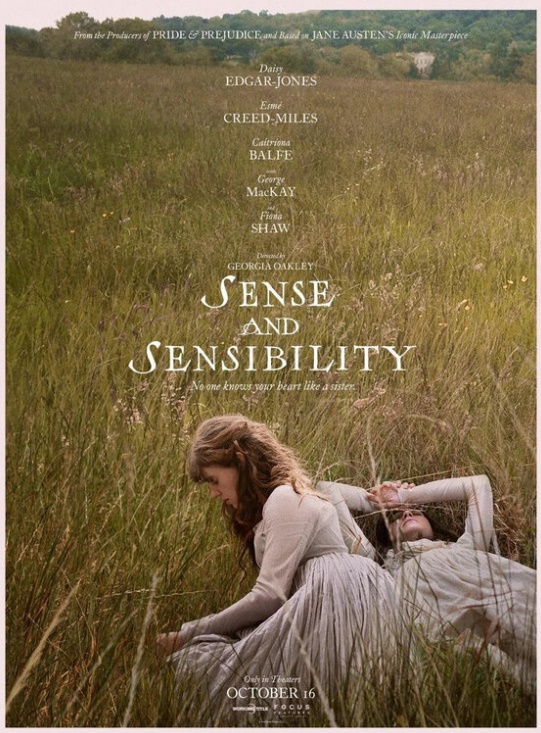
The setup is Austen’s own. Their father’s death costs the Dashwood women their estate, and Elinor, played by Daisy Edgar-Jones, Marianne, played by Esmé Creed-Miles, their younger sister and their mother, played by Caitríona Balfe, are relocated to a modest cottage in Devon. Money is no longer background detail; it is the weather. Every visit, every dance and every almost-confession happens under the pressure of knowing that love, for these women, is also an economic decision. Oakley never lets you forget that, and the film is better for it.
Sense and Sensibility 2026 review: the sisters carry this one
Edgar-Jones is superb in the harder role. Elinor feels everything and shows almost nothing, and the performance lives in pauses, swallowed sentences and glances held a second too long. Her scenes with George MacKay as Edward Ferrars are the romantic engine: two guarded people discovering that restraint can be its own kind of intimacy. Critics have split on the film’s temperature — per The Hollywood Reporter, via review roundups, this version can play morose and joyless next to Lee’s — but on this desk, the quiet is the point, and the Edgar-Jones and MacKay pairing has a reticent chemistry that builds beautifully. Creed-Miles plays the opposite register, all impulse and open wound, falling hard for Frank Dillane‘s dashing Willoughby. Their whirlwind is the film’s most uneven stretch, more ardent than persuasive, yet it serves the design: Marianne’s romance is supposed to outrun her judgment.
What lifts the film above a respectful remake is how it looks and how it loves its sisters. Shot on 35mm on location in Devon and Dorset, it has a tactile, windswept beauty that no volume stage can fake — wet grass, grey light, rooms that feel lived in rather than dressed. Fiona Shaw brings warmth and comic oxygen as Mrs. Jennings, and Diana Reid’s screenplay keeps Austen’s wit dry rather than cute. Per Collider, Oakley understands both the depths of the novel and how to streamline it for today’s audience, reframing the story through a modern lens without losing loyalty to the source. That balance is exactly what plays on screen.
A remake that earns its shelf space
Is it perfect? The middle sags slightly, and viewers devoted to the 1995 cast will spend the first act making comparisons the new film cannot win. But by the final stretch, when the sisters’ bond — tested, strained, repaired — takes full precedence over the suitors, this version has earned its own shelf space. Romcom and period-drama lovers, this is your weekend. Bring tissues, and bring your sister if you have one.
Verdict: ★★★★ out of 5 — a tactile, sister-first Austen with a quietly electric Elinor, and the rare remake that justifies itself.
Oscar worthy: yes — the 35mm photography, costumes and Edgar-Jones’s controlled, heartbreaking lead performance all belong in the awards conversation, with adapted screenplay close behind.
Sources: Collider on Oakley’s direction, Diana Reid’s modernized screenplay and the Dashwood sisters’ Devon move; Focus Features release, rating, runtime and cast details via the film’s reference page and poster coverage.