
A $400,000 creator contract, a fake Dallas dad, an email saying “disclosure is not required” — the New York Times followed the money into your feed, and both parties are in it.
The most effective political ad of 2026 may be one you never knew was an ad. That is the conclusion sitting inside a New York Times investigation published August 29, which documented — with dollar figures — how campaigns and political groups now pay social media creators for posts that arrive in your feed with no label, no disclaimer and no visible connection to the money behind them.
Follow the filings. In California’s governor’s race, Tom Steyer‘s campaign paid at least 17 influencers $5,000 or more apiece, according to campaign finance records analyzed by CalMatters and the Times. The top of the market: TikTok creator Carlos Eduardo Espina, with more than 14 million followers, received $400,000. Commentator/Influencer Josh Greene got $21,500. Katie Porter‘s campaign paid 12 influencers a total of $139,500 — including $25,000 to lifestyle creator Avery Cyrus, whose post was deleted after the Times started asking questions. Her agency’s CEO explained that the firm “was not asked to oversee disclosure compliance.”
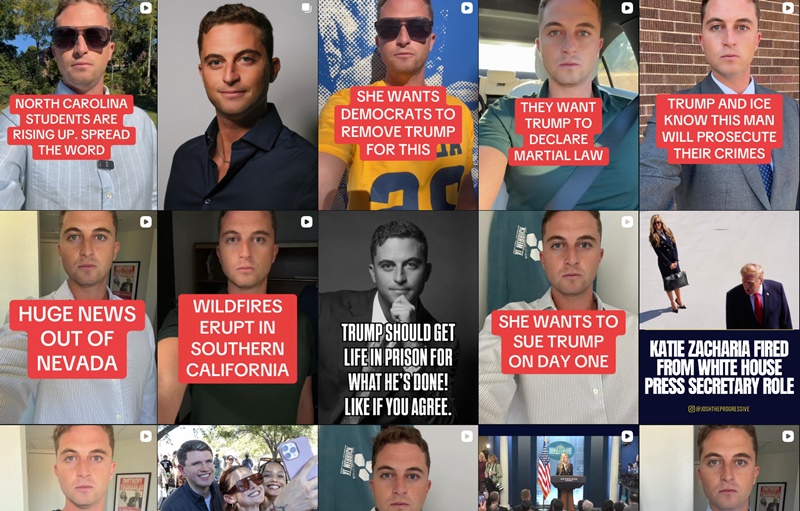
The concealment is not always passive. The Times found an agency recruiting a Michigan TikToker in June that put it in writing: “disclosure is not required and the paid partnership label will not be included.” One influencer paid $22,000 said the campaign agreed to hide the disclosure in a comments section reserved for flagged content — placed there, reportedly, to get around TikTok’s policy of removing paid political posts. And then there is the industrial version: a Democratic-aligned group called Project Bullhorn hired more than 100 small creators through a gig marketplace at $25 to $30 a video to post about the affordability crisis. Its most prolific face, “Drew,” presented as a struggling young dad near Dallas. Per the Times, his real name is Alex Forrester, he is from Utah, he lives in Florida, and in a video he later deleted he said it himself: “All of it was paid for. I don’t even live in Texas.”
Texas offers the purest mystery. In October, the Times identified dozens of TikTok accounts being paid $4 per 1,000 views by a group called Frontier Media to post positive videos about Senate candidate James Talarico. The Talarico campaign denied any involvement. Frontier Media has no filings with the Federal Election Commission — which means the money boosting a United States Senate candidate has no publicly known source at all.
Above the campaigns sits the subscription model. WIRED reported in August 2025 that Chorus, a nonprofit funded by the Sixteen Thirty Fund, pays Democratic creators up to $8,000 a month — with contracts that bar them from disclosing the relationship. A Chorus lawyer told recruits on a recorded Zoom that the structure “avoids a lot of the public disclosure or public disclaimers… Your names aren’t showing up on, like, reports filed with the FEC.” Chorus’s defenders answer that the program simply funds creators who could not otherwise afford the work, and the fund’s president disputes the reported restrictions. The House Oversight Committee has opened an investigation. The Center for Democracy & Technology’s “Paid to Post” report, published this month, puts the market rate anywhere from a few dollars to $30,000 per post — and warns the same opacity could carry foreign money into American feeds undetected.
And Republicans are not spectators. An Alabama congressman, Barry Moore, filed an FEC complaint alleging eight accounts were paid to attack his military record in a Republican primary. A Kentucky newspaper exposed a coordinated influencer network boosting a Republican Senate candidate. The practice is not a party habit. It is an industry.
Why can everyone do this in the open? Because the law has a hole exactly the shape of an influencer. The FEC’s disclaimer rules were written for TV, radio and conventional digital ads, and as of this fall they have never been formally extended to a creator’s paid post. The FTC’s endorsement rules cover products, not politics. A campaign must report the middleman it paid — never the creator who actually spoke to you. The Campaign Legal Center asked the FEC to close the gap a year ago. It is still open.
The 247 Take — Nobody is arguing creators should work for free, and nobody serious thinks a labeled ad is a scandal. The scandal is the unlabeled one: support that was purchased being sold back to voters as belief. Until a “paid for by” line follows the money into the feed, treat every suspiciously synchronized political opinion online as what it increasingly is — inventory.
More celebrity news at CelebnMusic247.com.
Sources: The New York Times via Particle News (the Aug. 29 investigation: Steyer, Porter, Espina, Cyrus) | The New York Times via GenZ NewZ (Project Bullhorn and the “Drew” case) | The New York Times via BoredTrashPanda (Frontier Media and the Talarico videos) | WIRED via The American Watch (Chorus, the $8,000 contracts and the Comer investigation) | Center for Democracy & Technology (“Paid to Post”: the $30,000-per-post market and the regulatory cracks) | Wpromote (the “disclosure is not required” email and the buried-disclosure case)