
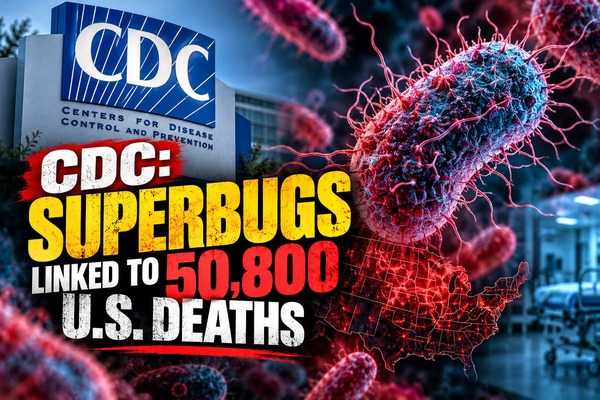
The CDC’s first full update in seven years counts 19 drug-resistant threats — and says the germs behind them now cause about 9.7 million infections a year.
By Dr Ron — The Wellness Desk — CelebnMusic247
The CDC has put a new number on an old problem. In its updated Antimicrobial Resistance Threats Report — the agency’s first comprehensive assessment in seven years, released this week — the CDC estimates that drug-resistant bacteria and fungi cause approximately 9.7 million infections and 50,800 deaths in the United States each year, per Healthline. The figures are based on 2023 data.
That is a large jump from the CDC’s 2019 report, which counted 2.8 million infections and 35,000 deaths, per Healthline. The agency is careful about the comparison: officials say the increase partly reflects a real rise in infections from certain resistant bacteria and fungi, but data sources and methods have also changed, and the CDC says direct comparisons between the two reports should not be made, per Healthline.
Where the harm concentrates
Infections commonly picked up in hospitals and other healthcare settings account for more than 42,000 of the deaths and cost the U.S. healthcare system more than $12 billion, per Healthline. The report names 19 drug-resistant pathogens in all: four classed as urgent threats, 13 as serious threats and two as concerning, plus a watch list of six more being monitored, per Healthline and USA Today.
The four urgent threats, per the CDC as reported by Healthline, are Candida auris, a fungus that spreads in healthcare settings; carbapenem-resistant Acinetobacter; carbapenem-resistant Enterobacterales (CRE), which can pass their resistance to other bacteria; and drug-resistant Neisseria gonorrhoeae, the bacterium that causes gonorrhea. Healthline reports that Candida auris cases have risen nearly tenfold since it was first detected in hospitals a decade ago, including a jump of more than 50% between 2022 and 2023, and that a recent study found CRE cases at U.S. hospitals rose 18% between 2019 and 2023.
What the experts quoted say drives it
The specialists Healthline spoke with pointed to one driver above the rest. William Schaffner, MD, of Vanderbilt University Medical Center, told Healthline the increase comes down to “overuse of antibiotics; using them for too long or in circumstances where they do not offer a benefit” — including treating viral infections, which antibiotics cannot help. Monica Gandhi, MD, of the University of California, San Francisco, told Healthline that this widespread use creates “selective drug pressure on the pathogen to evolve resistance to these antibiotics, making them harder to treat.”
“These numbers are alarming by any measure but are particularly sobering when infectious diseases physicians connect real patients with these statistics in their everyday experience,” Wendy Armstrong, MD, president of the Infectious Diseases Society of America, said in a statement quoted by Healthline.
Healthline’s general guidance from the report is prevention basics, not personal medical direction: hand hygiene, keeping vaccinations up to date, and taking antibiotics only as prescribed. This article is general information only, not medical advice — anyone with questions about an infection or a prescription should talk with their own doctor or pharmacist, who knows their situation.
The 247 Take — Seven years between reports is a long time to fly blind, and the new count explains why hospitals treat hand-washing and careful prescribing as front-line medicine rather than housekeeping. The germs are adapting on schedule; the CDC’s message is that our habits have to adapt faster.
Sources: Healthline, USA Today, Smithsonian Magazine